
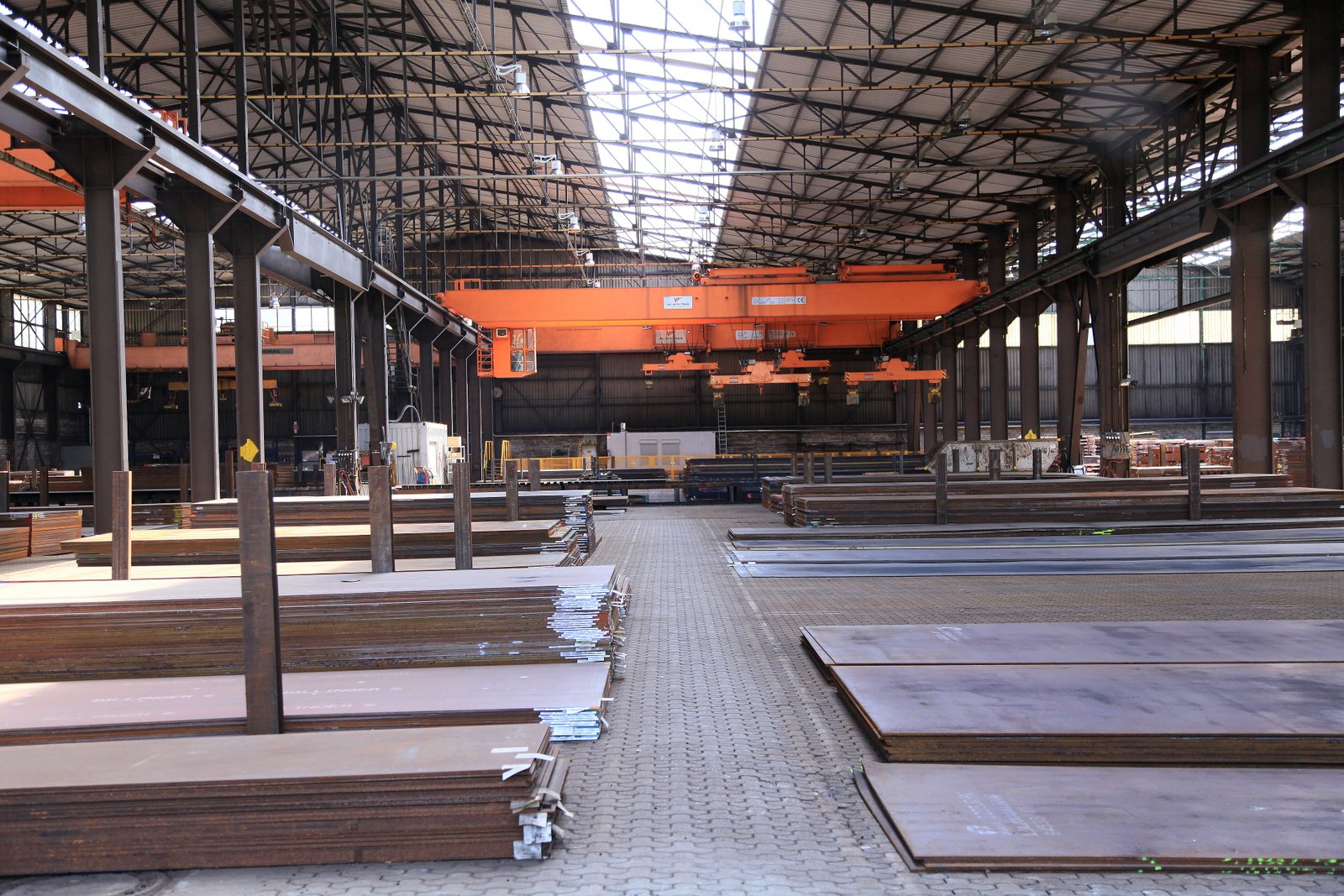
S355J0W Weathering Steel: Material 1.8959
S355J0W is a hot-rolled structural steel under EN 10025-5, also identified by material number 1.8959. The W denotes improved atmospheric-corrosion resistance; J0 identifies a 0°C Charpy impact quality.
Copper and chromium are among its specified alloying elements. In suitable exposure, the surface develops a protective weathered layer rather than behaving like ordinary unalloyed structural steel.
S355J0W Plates for Buildings and Infrastructure
Structural fabricators use weathering plate for engineered components in buildings, bridge-related steelwork and other exposed assemblies. It can form part of welded, bolted or riveted construction when the design calls for the grade.
Architectural metalworkers also use weathering flat products for facade elements and fabricated features. Drainage, adjacent finishes and the natural variation in surface colour are important to these applications.
S355J0W Plate and Sheet Sizes
ASC quotes plate thickness, width and length for project and distribution requirements. EN 10025-5:2019 covers S355J0W flat products up to 150 mm nominal thickness; the available supply combination is confirmed with the offer.
The strength reference below covers selected 3–40 mm material. The minimum yield requirement reduces as plate thickness increases.
S355J0W Plate and Sheet Supplier, Exporter and Stockist
ASC exports internationally and welcomes S355J0W enquiries from fabricators and distributors in the UK and Europe, as well as USA buyers working to EN specifications. Plate and sheet requirements are quoted to the requested dimensions and delivery condition.
We specialize in fast delivery and prioritize urgent requirements. The schedule depends on dimensions, quantity, availability and destination. Bundles or wooden boxes can be selected to suit the flat products and order.
Request an S355J0W Export QuoteS355J0W Chemical Composition
The selected heat-analysis limits distinguish S355J0W from plain structural steel and from the phosphorus-alloyed WP grades.
| Element | Limit |
|---|---|
| Carbon, C | ≤ 0.16 |
| Silicon, Si | ≤ 0.50 |
| Manganese, Mn | 0.50–1.50 |
| Phosphorus, P | ≤ 0.035 |
| Sulfur, S | ≤ 0.035 |
| Chromium, Cr | 0.40–0.80 |
| Copper, Cu | 0.25–0.55 |
| Nickel, Ni | ≤ 0.65 |
Selected elements only; the full composition and deoxidation provisions remain part of the specified standard. Heat-analysis limits differ from product-analysis tolerances.
2019 grade-composition reference, catalogue page 49
S355J0W Mechanical Properties
Yield strength describes the onset of permanent deformation. Tensile strength is the maximum tensile stress reached during the test; neither value alone gives the load capacity of a finished component.
| Nominal thickness, mm | Yield strength, minimum MPa | Tensile strength, MPa |
|---|---|---|
| 3–16 inclusive | 355 | 470–630 |
| >16–40 inclusive | 345 | 470–630 |
Reference for hot-rolled sheet/strip at least 600 mm wide, with transverse tensile testing. Values apply only to the stated thickness bands and are not actual heat-test results.
2019 grade-strength reference, catalogue page 49 · Test-direction and product-form reference
J0 Impact Quality and Delivery Condition
The J0 quality has a 27 J longitudinal Charpy-V reference at 0°C. Specimen-size and acceptance rules apply, and the test temperature is not a guaranteed minimum service temperature.
The delivery suffix identifies the condition of the steel: +AR means as rolled, +N means normalized or normalizing rolled, and +M means thermomechanically rolled. The required condition is agreed for the supplied material, especially where further forming or heat treatment is planned.
Fabrication and Outdoor Performance
Weld procedures and consumables need to suit the actual composition, thickness, joint and service. When exposed welds must weather with the parent steel, weld-metal selection is also relevant to the finished appearance and corrosion performance.
Protective weathering requires an environment that allows wetting and drying. Water traps, persistent dampness and chloride-rich exposure need assessment. Run-off should be directed away from concrete, paving and other surfaces vulnerable to staining.
Material Documents and Inspection
Mill test certificates and additional inspection can be requested for S355J0W orders. The documentation identifies the supplied grade, delivery condition and relevant test results, with additional acceptance requirements agreed for the project.
S355J0W Plate and Sheet FAQs
What does S355J0W mean?
It identifies a structural weathering-steel grade under EN 10025-5. J0 is the 0°C impact quality, W indicates improved atmospheric-corrosion resistance, and 1.8959 is its material number.
Is S355J0W the same as S355J0WP?
No. The WP grade is phosphorus-alloyed and has a different composition and product scope. The extra P is a material distinction, not an optional abbreviation.
How does S355J0W differ from S355J2W?
The J0 and J2 qualities have different impact-test temperatures. Their specified phosphorus and sulfur maxima also differ. The correct grade depends on the complete project requirement.
Does S355J0W always have a 355 MPa minimum yield strength?
No. The selected reference gives 355 MPa for 3–16 mm material and 345 MPa above 16 mm through 40 mm. Other thicknesses have their applicable requirements.
Can S355J0W plate be supplied for unpainted use?
It can be used unpainted where the design and environment support protective weathering. Drainage, drying, chloride exposure and staining of adjacent finishes should be assessed.
What do +AR, +N and +M mean?
They identify as-rolled, normalized or normalizing-rolled, and thermomechanically rolled delivery conditions respectively. The agreed condition is recorded for the supplied material.
Can I request an inspection document for S355J0W?
Yes. Mill test certificates and additional inspection can be requested. The quotation can include the specified edition, delivery condition and project-specific acceptance requirements.
What determines the export price and delivery schedule?
Dimensions, quantity, delivery condition, inspection scope, availability and destination affect the offer. ASC prioritizes urgent requirements and provides packing suitable for the material and order.