
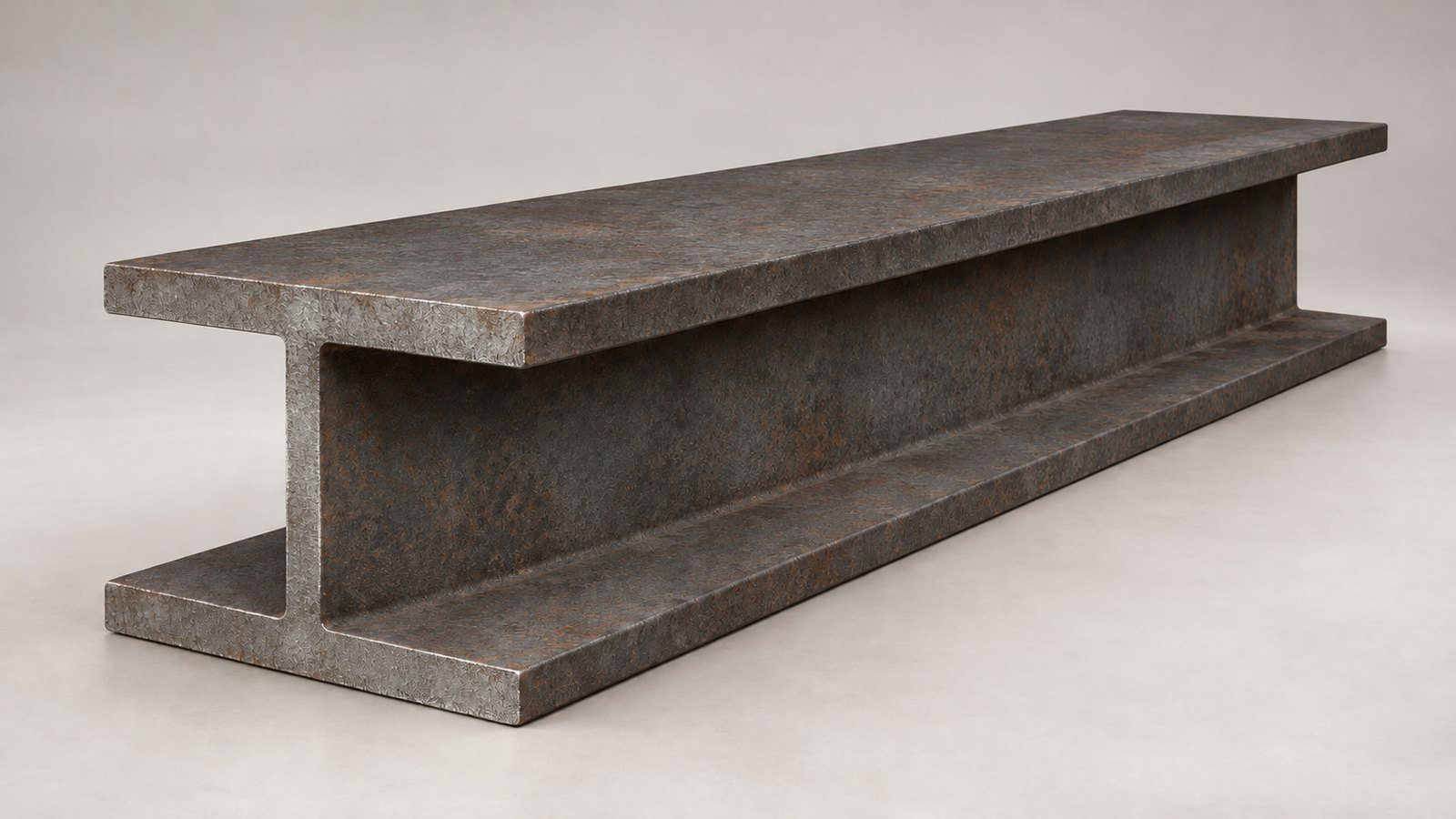
Corten Steel H Beams for Exposed Frames and Columns
Amardeep Steel Centre LLP supplies Corten steel H beams for structural contractors, fabricators and project buyers. The term commonly describes broad-flange sections used in designed frames, columns and beam arrangements. Their flat flange faces provide practical connection surfaces, while a weathering grade can form part of the exposed architectural character of the steelwork.
An H beam should be purchased by its complete section designation and material specification. Overall depth alone does not identify flange width, thickness, mass or the properties needed for design. Our quotation review brings the cross-section, lengths and project requirements together, helping buyers distinguish the required member from a superficially similar available section.
Submit your H beam schedule through our project supply enquiry. Include the weathering grade, quantity by length, inspection requirements and delivery destination.
H Beam Configurations and Specification
Broad-Flange Structural Sections
Broad-flange sections have a web connecting two relatively wide flanges. Depending on the project’s section system, drawings may use HE, UC, W or another defined series. The commercial name H beam does not make these series equivalent: the proportions, radii and dimensional conventions differ. Preserve the exact designation from the structural schedule when requesting a price.
Column and Frame Members
A broad-flange section can provide useful connection space for beams, brackets and plates on a frame. In column applications, the design considers both principal directions, member length, restraints and connection stiffness. The flange width is only one part of that assessment. Show the orientation and splice details where a member is installed through several levels or connected to beams from different directions.
Built-Up H-Shaped Members
Where the design calls for a non-standard geometry, a built-up member may be specified from separately selected web and flange plates. Its welds and fabrication tolerances are part of the engineered product. State whether this route is permitted before a quotation is prepared, and distinguish it from a hot-rolled section. For the associated flat material, see our weathering-steel plate and sheet range.
Dimensions, Lengths and Connection Details
| Specification | Information needed |
|---|---|
| Section series and size | Exact designation, including weight or suffix where used, or a full drawing. |
| Cross-section | Depth, flange width, web thickness, flange thickness and relevant radii. |
| Member length | Quantity by length, end condition, length tolerance and item marking. |
| Column or beam orientation | Installed axes, attachment faces and splice orientation. |
| Material and inspection | Required weathering grade, standard edition, certificate and any toughness testing. |
| Additional work | Drilling, end preparation, base plates, stiffeners or other specified processing. |
For a coordinated frame package, identify each member with the same mark used on the drawings. This helps align the quotation, material records, packing list and erection schedule. If an alternative section is offered, its dimensions and properties should be reviewed by the designer before order acceptance; a near match in mass per metre is not a sufficient substitution check.
Choosing Between H and I Sections
The terms H beam and I beam are often used inconsistently across markets. A broad-flange H-shaped member may suit a particular connection arrangement, while a different I-shaped series may be selected for its depth and bending properties. The correct choice follows the structural design, not a blanket rule that H sections are for columns and I sections are for beams.
Compare the actual section schedule with our Corten steel I beam supply page. Check flange width, thickness, root geometry and clear space for fasteners when adjoining parts must fit. For replacement work, recording the existing member’s dimensions and identification is particularly useful because historic sections may differ from current catalogue series.
Material Grade, Chemistry and Mechanical Properties
The section shape and the steel grade are separate choices. For H beams, a project may specify ASTM A588 Grade B or an appropriate EN weathering grade, together with the product dimensions and delivery requirements. The material documents must identify the ordered grade; an ordinary carbon-steel section does not become weathering steel simply by developing a brown surface.
The following reference summarises A588 Grade B structural-shape data in the ArcelorMittal 2023 sales programme, published against ASTM A588/A588M-19. Its listed supply scope is nominal thickness up to 63 mm. It is a material reference, not Amardeep stock availability; use the edition and certificate required by the purchase order.
| Element | Heat-analysis reference, mass % |
|---|---|
| Carbon C | 0.20 maximum |
| Manganese Mn | 0.75–1.35 |
| Silicon Si | 0.15–0.50 |
| Sulfur S | 0.05 maximum for structural shapes |
| Phosphorus P | 0.04 maximum for structural shapes |
| Copper Cu | 0.20–0.40 |
| Nickel Ni | 0.50 maximum |
| Chromium Cr | 0.40–0.70 |
| Vanadium V | 0.01–0.10 |
| Property | Structural-shape reference |
|---|---|
| Yield strength | 345 MPa minimum |
| Tensile strength | 485 MPa minimum |
| Elongation, 200 mm gauge length | 18% minimum, subject to A6/A6M adjustments |
| Elongation, 50 mm gauge length | 21% minimum within the producer’s stated thickness scope, subject to A6/A6M adjustments |
The producer table also specifies a maximum carbon equivalent of 0.47% for flange thickness above 50 mm; the full standard’s chemistry provisions apply. Impact toughness, if required, must be ordered explicitly. Material strength does not establish the capacity of a member without its section geometry, restraint and connection design.
| Related designation | How to compare it |
|---|---|
| ASTM A588 Grade B | A defined structural material grade; retain its ordered standard and edition. |
| S355J0W / S355J2W | EN weathering grades with distinct toughness designations and thickness-dependent requirements. |
| Corten B | A commercial weathering-material designation; confirm the actual producer specification and product form. |
Our ASTM A588 material page and S355J2W material information provide related grade context. Those flat-product pages are useful for separately ordered connection plates, but they do not replace the documentation for the section itself. Similar strength or weathered colour is not proof of automatic grade equivalence.
Connections, Base Details and Fabrication
H-shaped members often meet several components at one joint. Base plates, splices, stiffeners and beam connections should therefore be detailed together. Show bolt holes, access for welding and any surfaces that need a particular finish. Where both flanges receive attachments, identify the member orientation to avoid mirrored or rotated parts reaching site.
The selected welding procedures, consumables and inspection should suit the actual grade and thickness. Thermal cutting, drilling and weld preparation can affect local fit and finish, so include the required tolerances in the fabrication documents. For exposed steelwork, agree how weld appearance and surface preparation will be reviewed without removing material needed by the structural detail.
Applications Across Construction and Fabrication
| Application | Design and purchasing focus |
|---|---|
| Building frames and columns | Member orientation, splices, base connections and documented material grade. |
| Architectural exposed structures | Visible flange faces, coordinated joints and the intended weathering appearance. |
| Industrial support frames | Loads from supported equipment, connection stiffness, restraint and inspection. |
| Infrastructure and project steelwork | Approved section schedules, traceability, delivery sequence and specific project requirements. |
Secondary Corten channels and weathering-steel flat bars can be scheduled separately for connecting and fabricated details. Their material and geometry should be specified in their own right, particularly where they form part of a welded assembly.
Drainage, Surface Condition and Inspection
Broad flanges can create horizontal ledges at certain orientations. Detail the structure to avoid debris and water collecting at the web, connection plates or base. The weathering surface should be able to dry, and enclosed or permanently damp contact areas need separate consideration. Salt-laden exposure and de-icing contamination should be assessed before choosing a bare weathering system.
Material inspection and project inspection serve different purposes. Check the section identity, dimensions, straightness and traceability on receipt, then follow the agreed fabrication and structural inspection plan. A uniform brown surface does not prove that a beam has the specified chemistry, toughness or dimensional accuracy. Retain the material documents with the member schedule.
Packing and International Supply
For export requirements, send the delivery destination, required date and any restrictions on handling long or heavy members. Packing and supports should protect prepared ends and attachment details while keeping the load stable. Marking by item or bundle helps maintain traceability through transport and storage. Availability, processing and the delivery schedule are confirmed for the exact section and quantity in the offer.
Frequently Asked Questions
What does H beam mean in an enquiry?
It is a broad commercial description of an H-shaped structural section. Give the recognised section series and size, or a dimensioned drawing, to identify the actual member required.
Can an H beam be used as a column?
It can be selected for a column by the structural designer, but suitability depends on the complete member and frame design. Length, restraint, axes, connection conditions and loading all matter.
Are H beams stronger than I beams?
There is no useful universal comparison from the names alone. Compare the actual section properties, material grade and design conditions for the specific members.
Can I replace a rolled H section with a fabricated one?
Only after the designer accepts the proposed geometry, material, weld design, tolerances and inspection. The route must be clearly identified in the quotation and drawings.
Can base plates and drilled connections be included?
List them with drawings, quantities and inspection requirements. Identify whether you need the raw section, processed members or a coordinated assembly so the scope is clear.
Does the Corten name guarantee an ASTM grade?
No. The purchase specification and material certificate must identify the required standard and grade. A weathered finish or trade name is not a substitute for those documents.
What finish will the member have on delivery?
State the requested surface condition in the enquiry. Natural weathering develops with exposure and varies across sheltered and exposed faces; a specific pre-weathered treatment should be agreed separately.
What information helps avoid site fit-up problems?
Use the exact section designation, consistent item marks, installed orientation and current connection drawings. Include hole locations, end details, tolerances and any restrictions on field modification.
Request a Corten Steel H Beam Quotation
Send your section schedule, grade, length quantities and processing requirements to Amardeep Steel Centre LLP. Email deepak@amardeepsteelllp.com or call +91-8591210578 for a quotation aligned with your project specification.