
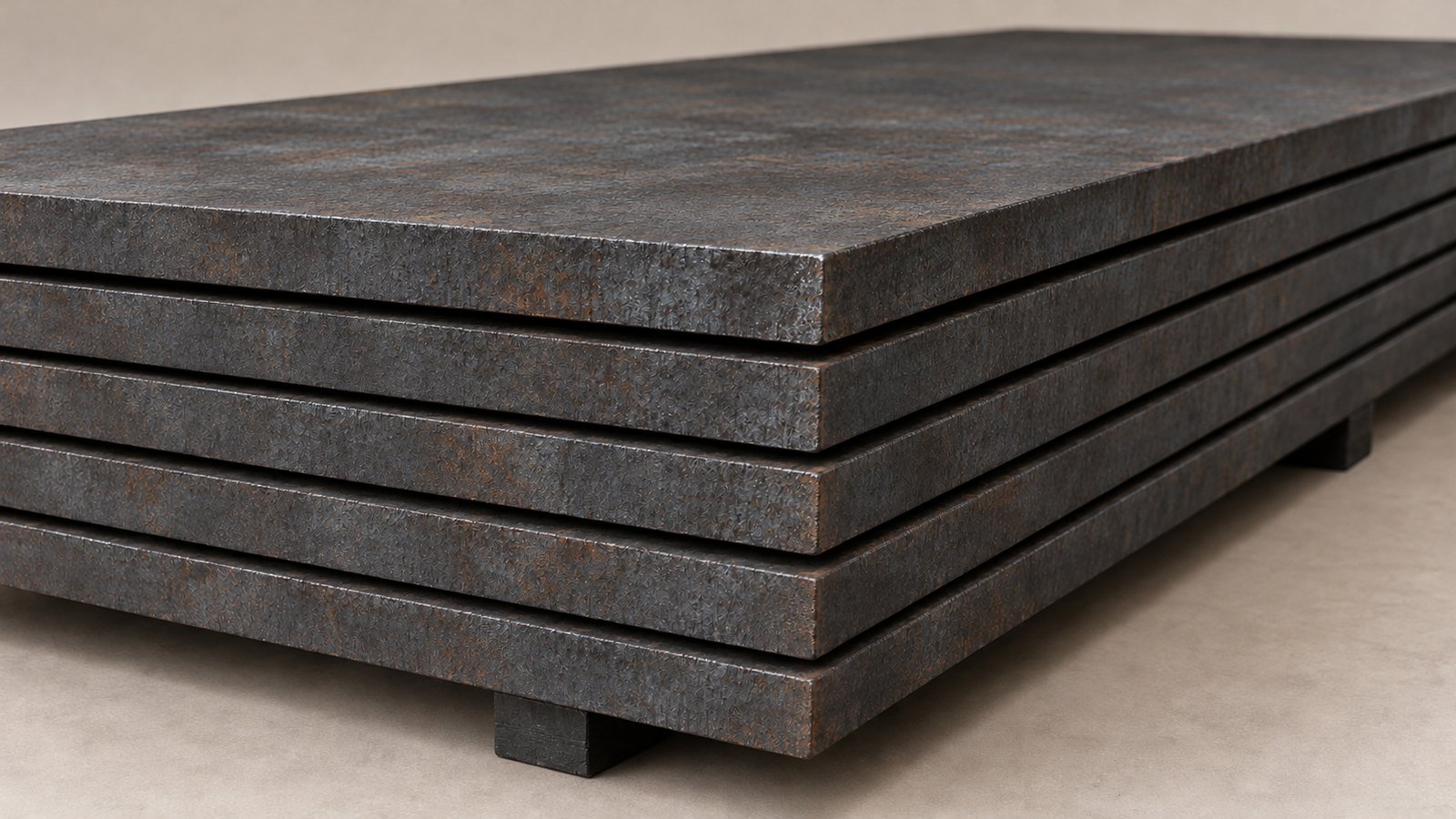
Weathering Steel Plate for Structural Fabrication
ASTM A588 is a high-strength, low-alloy structural steel specification used for welded, bolted and riveted construction. In suitable outdoor conditions, its surface develops a protective weathered layer, giving exposed steelwork its characteristic appearance.
For a bridge or building project designed to use unpainted weathering steel, this can reduce reliance on a conventional paint system. Good drainage and periods of drying remain important to its performance.
ASTM A588 Grade A and Grade B Plates
The grade letter identifies a different chemical composition, rather than a ranking of product quality. Grade A and Grade B have different specified limits for elements including carbon, manganese, silicon, copper, nickel, chromium and vanadium.
Both grades share the strength requirements in the selected plate-thickness reference below. The approved grade remains part of the material specification; a similar strength level alone does not establish interchangeability.
ASTM A588 Plate Thickness and Dimensions
The published ASTM A588/A588M-24 scope covers material up to 8 in [200 mm] thick. ASC quotes plate thickness, width and length for the project requirement, with available dimensional combinations confirmed in the offer.
The mechanical values below cover a selected 0.188–2.00 in plate-thickness band. For thicknesses outside this reference band, the applicable requirements follow the specified standard edition.
ASTM A588 Plates for Construction and Infrastructure
Bridge fabrication, building steelwork and exposed structural components are principal applications for ASTM A588 plate. It is suited to projects where structural strength and atmospheric-corrosion resistance are both part of the engineering requirement.
The steel can be incorporated into welded, bolted or riveted assemblies. Welding procedures and consumables must suit the grade, plate thickness and intended service; the weathered appearance does not replace the structural design requirements.
ASTM A588 Plate Supplier, Exporter and Stockist
ASC welcomes export enquiries from project buyers in the USA, fabricators in the UK and distributors across Europe. We handle Grade A and Grade B plate requirements for new construction, fabrication schedules and distribution.
We specialize in fast delivery and prioritize urgent export orders. Plate size, quantity, material availability and destination determine the delivery schedule. Bundles or wooden boxes can be selected to suit the plate dimensions and order.
Mill test certificates and additional inspection can be requested, with the documentation and inspection scope agreed for the order.
Request an ASTM A588 Export QuoteASTM A588 Grade A and Grade B Chemical Composition
The following heat-analysis limits show the alloying differences between the two grades. Values are mass percentages.
| Element | Grade A | Grade B |
|---|---|---|
| Carbon, C | ≤ 0.19 | ≤ 0.20 |
| Manganese, Mn | 0.80–1.25 | 0.75–1.35 |
| Silicon, Si | 0.30–0.65 | 0.15–0.50 |
| Phosphorus, P | ≤ 0.030 | ≤ 0.030 |
| Sulfur, S | ≤ 0.030 | ≤ 0.030 |
| Copper, Cu | 0.25–0.40 | 0.20–0.40 |
| Nickel, Ni | ≤ 0.40 | ≤ 0.50 |
| Chromium, Cr | 0.40–0.65 | 0.40–0.70 |
| Vanadium, V | 0.02–0.10 | 0.01–0.10 |
For each 0.01 percentage-point reduction below the specified carbon maximum, the manganese maximum may increase by 0.06 percentage points, up to 1.50%. This reference uses the stated 2019 edition; the ordered edition and analysis basis govern material acceptance.
A588-19 chemical reference, section 6.1.5.3
ASTM A588 Plate Mechanical Properties
Yield strength marks the onset of permanent deformation, while tensile strength describes the maximum stress reached in the tensile test. Elongation measures how far the test specimen stretches before fracture and depends on the specimen dimensions.
| Property | Grade A and Grade B |
|---|---|
| Yield strength, minimum | 50 ksi |
| Tensile strength, minimum | 70 ksi |
| Elongation, baseline minimum — 2 in gauge length | 21% |
| Elongation, baseline minimum — 8 in gauge length | 18% |
Transverse tensile testing to ASTM A6 requirements. For plate wider than 24 in, reduce the baseline elongation requirement by two percentage points. Below 5/16 in thickness, ASTM A6 elongation adjustments also apply, together with other applicable specimen adjustments.
These published grade requirements do not identify a standard edition. The values are a selected reference for the thickness band shown; the edition specified for the order governs acceptance.
Grade A tensile reference · Grade B tensile reference
Unpainted A588 Steel and Weathering Conditions
Protective weathering develops through exposure that allows the steel to become wet and then dry. Details that trap water or debris can interfere with this process. Persistent dampness and significant chloride exposure require particular assessment.
Run-off from weathering steel can stain adjacent concrete, paving and finishes. Drainage and the position of exposed plate therefore matter to the completed installation, as well as to the steel itself.
ASTM A588 Plate FAQs
What is the difference between ASTM A588 Grade A and Grade B?
Grade A and Grade B have different chemical limits. They share the selected strength and baseline elongation requirements for the stated 0.188–2.00 in plate band, but the exact grade required by the project must still be supplied.
Is ASTM A588 Grade B the same as Corten B?
The names should not be treated as interchangeable. ASTM A588 Grade B is a specified ASTM grade, while Corten B is a trade/material description. The material specification and test records establish the supplied plate’s compliance.
Can ASTM A588 plate be left unpainted?
It can be used unpainted where the environment and detailing support protective weathering. Drainage, drying, chloride exposure and staining of adjacent finishes should be considered in the design.
Does every ASTM A588 plate have a 50 ksi minimum yield strength?
No. The selected reference gives 50 ksi for Grade A and Grade B plate within the stated 0.188–2.00 in thickness band. Other thickness bands have their own requirements.
What affects the elongation requirement?
Gauge length, plate width, thickness and ASTM A6 specimen adjustments all matter. For plate wider than 24 in, the stated baseline elongation is reduced by two percentage points; thin-plate and other applicable adjustments also apply.
Can I request a mill test certificate or additional inspection?
Yes. Mill test certificates and additional inspection can be requested for an ASTM A588 plate order. The agreed inspection scope and documentation form part of the quotation.
How are ASTM A588 plates packed for export?
Packing can use bundles or wooden boxes, selected to suit the plate dimensions and order quantity. The packing method is agreed for the order.
What affects ASTM A588 plate price and delivery?
Grade, plate dimensions, quantity, inspection requirements, availability and destination influence the quotation and schedule. ASC prioritizes urgent export requirements without applying one lead time to every plate order.
Related Weathering-Steel Structural Profile Enquiries
If your drawing requires a shaped section rather than flat plate, explore Corten Steel I Beam, Corten Steel H Beam, Corten Steel Channel, Corten Steel Flat Bar, Corten Steel Angle Bar. Confirm product-form and grade compliance separately.